About the authors
More About Opa
Marv Wainschel
Early Childhood and Family History
Before I was ten, my parents were deeply afraid that my sister and I might be taken from them, either by illness or by forces outside the family. Both had narrowly escaped persecution in the countries where they were born, and most of their families were killed because of religious prejudice. My father carried bitterness and distrust from that experience, and as a result, I was sheltered physically, socially, and even intellectually until about age ten.
Those early years were marked by poverty and isolation. I had no friends and was thoroughly socially inept. My mother read to me—first Bible stories and fables, and later children’s books from the public library, including Dr. Seuss, but I could relate to none of it. In public school, around age five, I was introduced to words and reading. Still, the books felt far removed from my life. Dick and Jane had a dog named Spot and walked along streets with lawns, which seemed unreal to me. I did not know anyone who had a dog, and I had never seen lawns in a neighborhood where people lived. To me, book characters seemed phony, and I did not yet understand what I could learn from them.
Friendship and Growing Confidence
When we moved to the suburbs at age ten, I began to learn about friendship from Herbie, a neighbor my age. He was smart, caring, and far more streetwise than I was. He also came from a loving family and was simply a good person. I lucked out. That friendship gave me a foundation, and from there I was able to form more friendships through high school.
College, Music, and Family
During college in New York City, I met people who encouraged me to broaden my cultural world through new foods, new friendships and new books. Around that time, I also became interested in quartet singing. Eventually, that hobby led me to Michele— another lucky break.
Michele and I had three children together, and she took the lead in raising them. I had learned about parenting mostly from books, while Michele had the benefit of healthy childhood experiences. Her example helped shape the family life we built together.
Writing Stories with a Purpose
Over the course of my career, I wrote books and magazine articles on business management, religion, philosophy and politics. Yet I had never written fiction until a few years ago, when I felt moved to write a story for one of our granddaughters, who was six years old at the time.
During a weeklong visit to her home, she was often unhappy with her circumstances, and I wanted to introduce the idea that a person can choose a different way of being. A story seemed like the best way to share that concept. I wrote one and read it to her. My four year old grandson was there too, and he listened along with interest and enjoyment.
I do not know whether the story made a lasting impact on either of them, but I enjoyed reading it aloud. I also enjoyed describing a fictional child who, though made up, could have been real and could have learned the lesson I hoped to teach.
Why Lessons for Little Learners Matters
As a child, reading was often laborious because I did not have enough experience with it. That weak foundation followed me into my twenties, when I finally began to read comfortably, quickly, and with understanding. I wanted to help children develop those skills earlier, so their ability to learn could grow without the struggle I experienced.
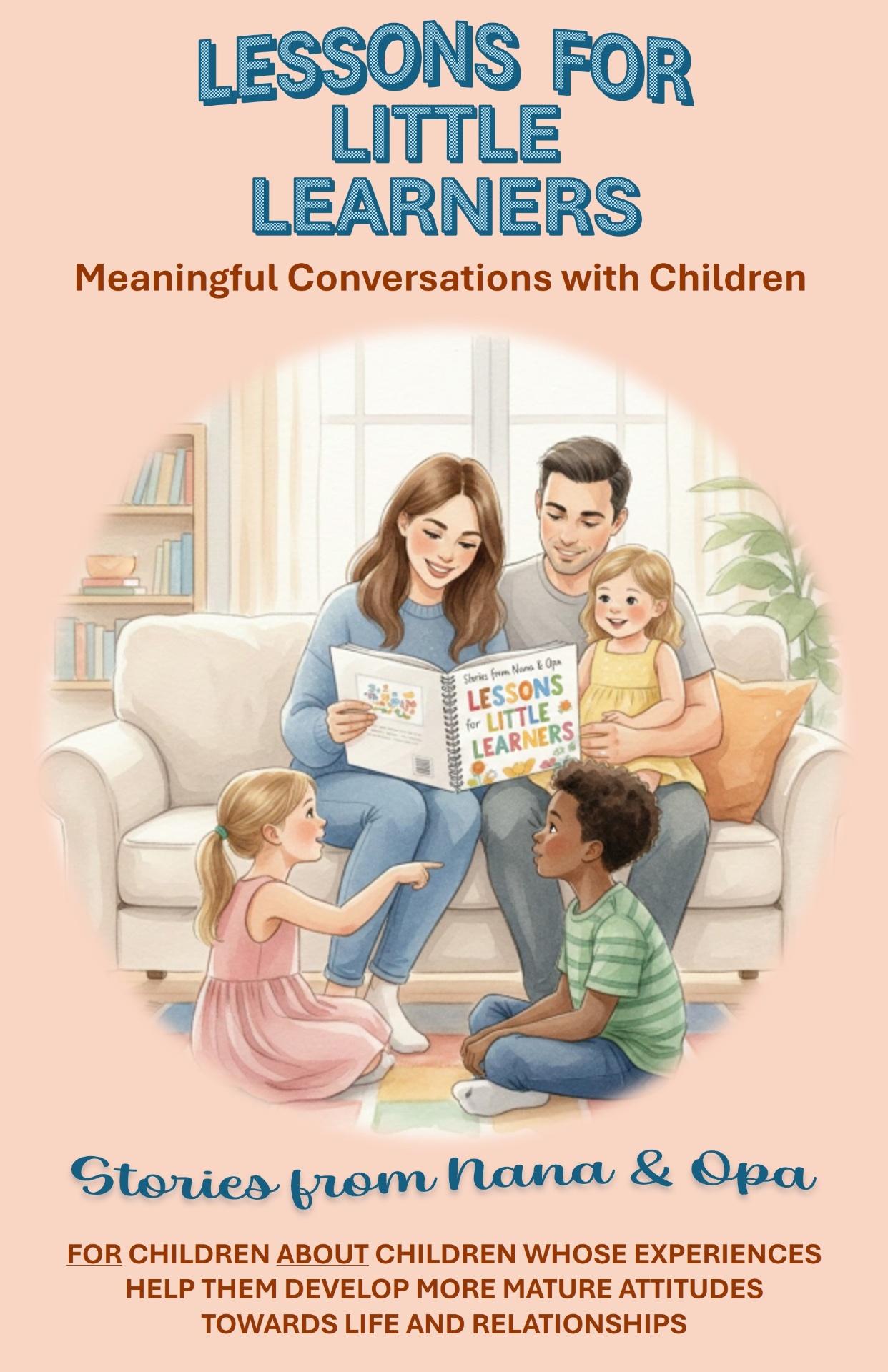
When Michele suggested that we write more short stories together, I jumped at the opportunity. The result is Lessons for Little Learners, and I look forward to writing more soon.